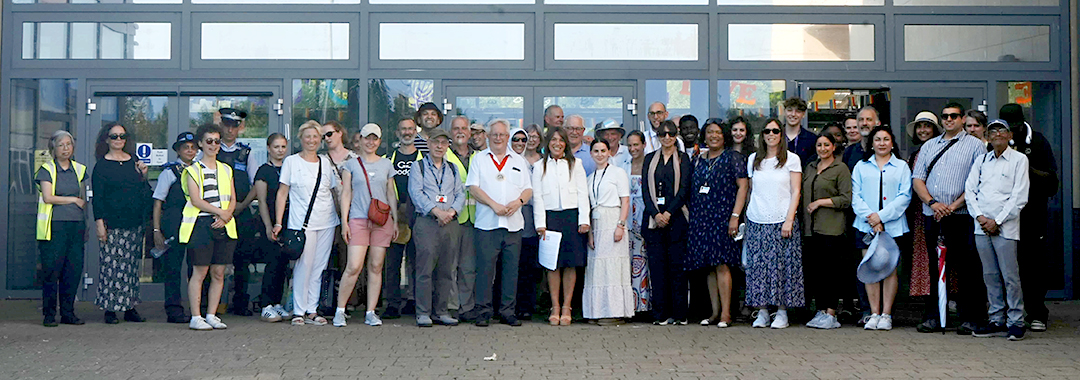
On one of the hottest days of the year, residents and friends of all faiths and none came together for the fourth annual New and East Barnet Faith and Peace Walk, co-organised by Barnet Multi Faith Forum (BMFF) and Middlesex University Inter Faith Network. Mayor Cllr Danny Rich and Deputy Lord Lieutenant Martin Russell MBE, plus Councillors of all parties and officers were also in attendance.
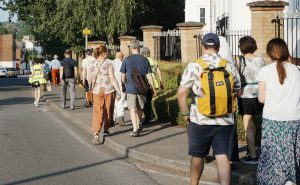 The walk began at 4 pm at the beautiful Christ Church, Cockfosters, and from there participants journeyed through the diverse and historically rich neighbourhoods of New and East Barnet, visiting a range of sacred spaces, community hubs and open-air heritage sites. The route highlighted the diversity and depth of New and East Barnet’s faith communities and open spaces, many of which are also being featured in this year’s London Festival of Architecture.
The event offered a unique opportunity to explore the area's rich heritage while connecting with neighbours from diverse backgrounds. Participants visited a variety of places of worship and community spaces, such as St James Church, Barnet Subud Hall, Victoria Recreation Ground and passing the picturesque Tibetan Yungdrung Study Centre, engaging in meaningful dialogue and reflection throughout the journey.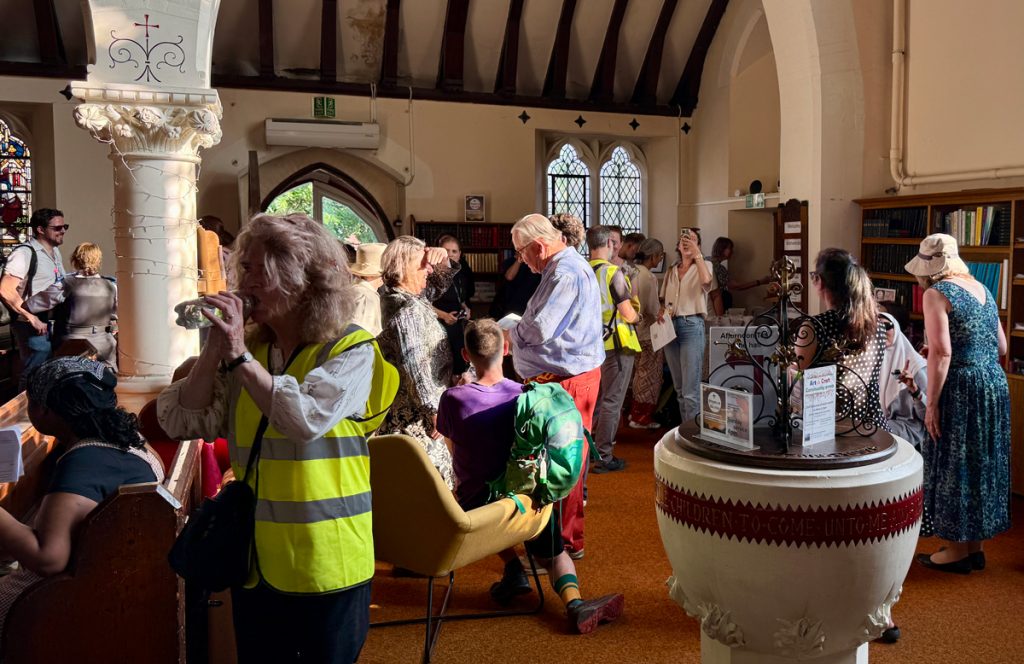
“This walk is about more than buildings,” said Monna Rizvi, Co-Chair Middlesex University Inter Faith Network. “It is about the people who use them, the values they carry, and the communities they build. Today’s walk was a testament to the power of inclusion and togetherness.”
BMFF President Es Rosen added, “Despite the blazing sunshine, we saw an incredible turnout. This annual walk continues to grow, and today, it truly reflects the vibrant, multi-faith heart of Barnet. We are proud to stand together with Middlesex University in creating a space where people of all faiths and none feel welcomed and connected.”
The warm hospitality and openness of staff at JCoSS, the Jewish school rooted in pluralistic values, truly reflected the spirit of the day and this generosity was echoed by all the places of worship we visited along the route, including Kingdom Hall of Jehovah’s Witnesses and Lyonsdown Hall. The final stop was at the deeply welcoming Brookside Methodist Church, where we heard from community leaders about interfaith initiatives, and many volunteer organisations exhibited their amazing work in the community, including the Community Quilts, which were on display to mark Refugee Week.
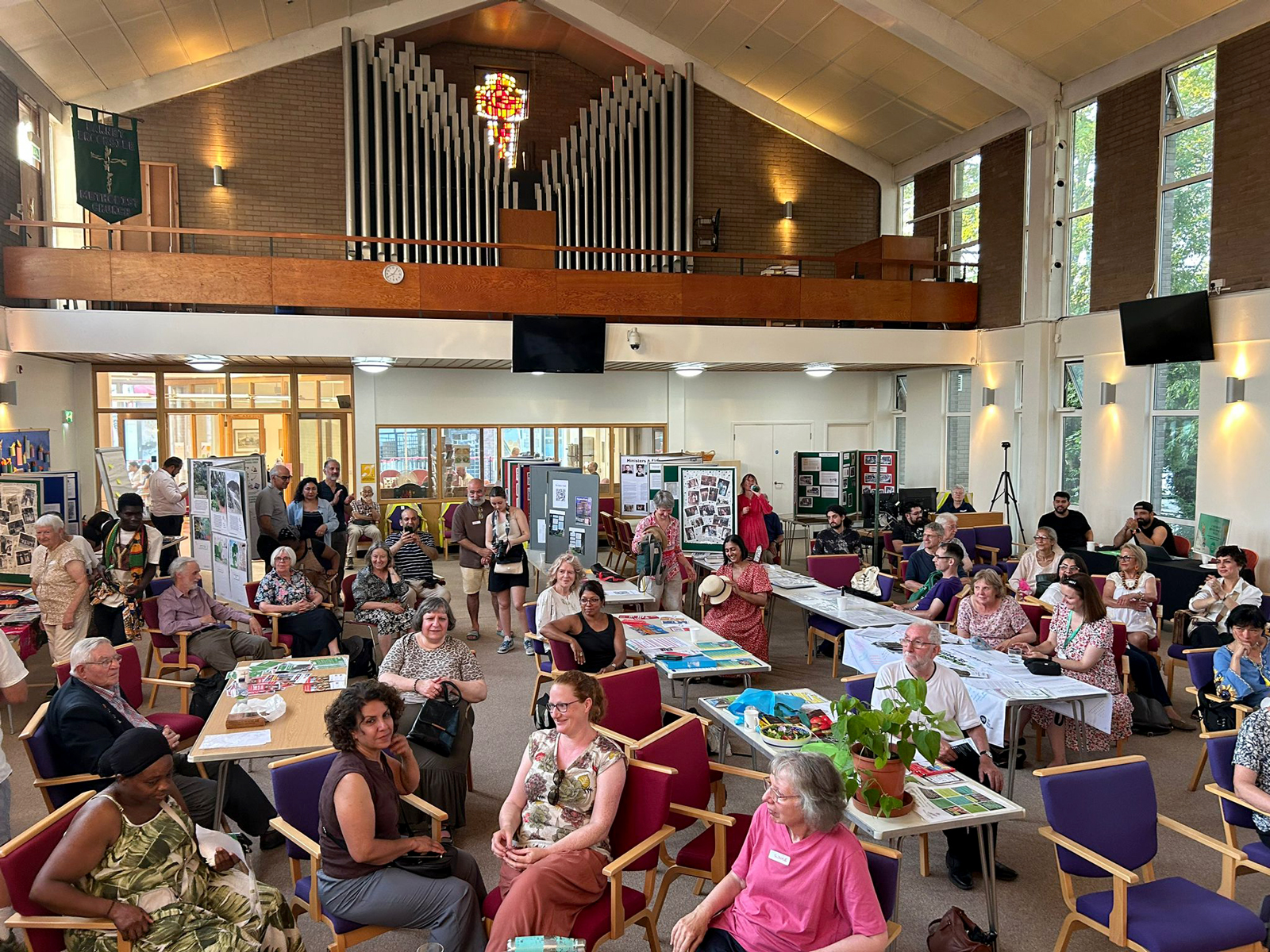
The Faith and Peace Walk is a key annual event for Barnet Multi Faith Forum, which works year-round to foster understanding and build bridges across religious and cultural divides. Events like this bring to life BMFF’s belief in an inclusive Barnet where everyone feels they belong - regardless of belief, background or identity.
Despite the heat, the turnout exceeded expectations, and the walk was a true celebration of what it means to live together in harmony. Organisers would like to thank all the faith organisations, volunteers, and participants who helped make this year’s event such a vibrant success.
To experience highlights of the event, watch this short video.
A booklet featuring the history of all the places on the walk was distributed to participants, created in partnership with Creative Sensemaking CIC.
Faith and Peace Walk 2025 booklet